
SOURCE WATER · TREATMENT · WATER QUALITY
Drinking water treatment and desalination
Evaluate groundwater, surface water and brackish sources against the quality required for their intended use.

Water from a well, reservoir or surface source can contain dissolved constituents, suspended particles and microbial hazards. A treatment concept begins with source-water testing and the requirements of the proposed supply. NOVA can help define equipment and technical requirements for source-water treatment and desalination opportunities.
Characterise the source and its variability

A source assessment considers chemistry, microbiological quality, flow and changes over the operating cycle. Groundwater may contain iron, manganese, arsenic, nitrate, hardness or dissolved gases. Surface-water turbidity and contaminant loading can change with weather and seasonal conditions.
These conditions determine which treatment stages need to be evaluated. A visually clear sample does not establish that water is suitable for drinking.
Treatment options matched to the contaminants
Oxidation and filtration
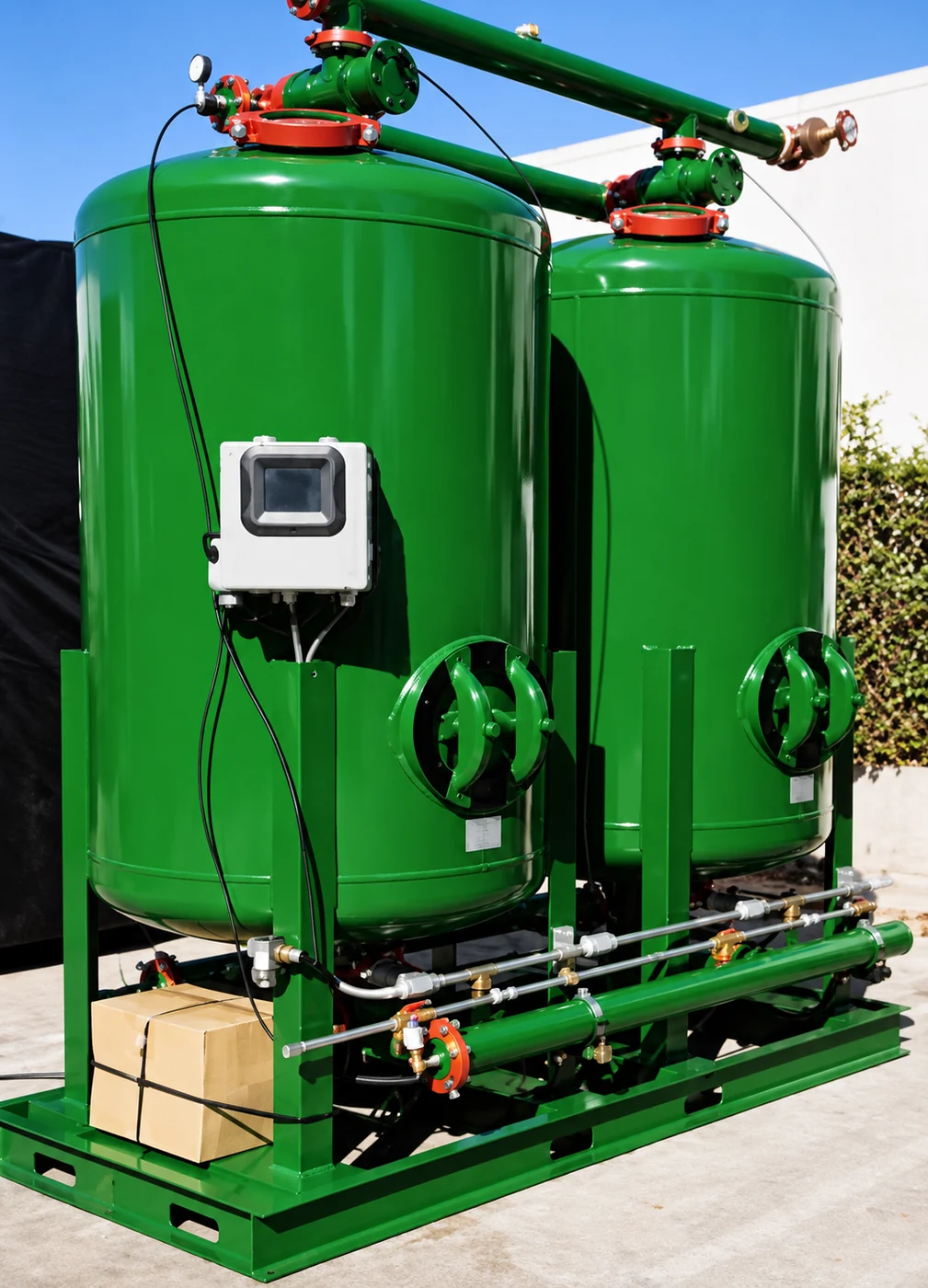
Oxidation can help convert selected dissolved constituents into forms suitable for removal by subsequent treatment. The required chemistry and filtration stages depend on the contaminant, its form, pH and competing constituents.

Coagulation and clarification
Chemical conditioning and solids separation can support turbidity control and selected contaminant-removal duties. Arsenic-treatment concepts may include ferric dosing and filtration, subject to water chemistry and testing.

Ion exchange
Resin systems can be evaluated for softening or nitrate removal. Selection includes competing ions, regeneration requirements, the quality of the treated water and the handling of spent regenerant.

Aeration and solids separation
Aeration may assist the removal of selected dissolved gases and provide oxygen for certain treatment duties. Hydrocyclones or other solids-separation equipment can be considered for sand and heavier particles where appropriate.
Desalination as part of a coordinated treatment train
Reverse osmosis can be evaluated for brackish-water desalination. Pretreatment must address the specific feed, including scaling and fouling risks, and the design must account for recovery, energy requirements, membrane care and concentrate management.
The permeate may require further conditioning or treatment for the proposed use. Reduced salinity is one part of the water-quality requirement; it does not establish drinking-water suitability on its own.
Disinfection and validation
Where drinking-water use is proposed, microbial control, suitable disinfection and safe storage and distribution must be considered within the overall design. Chemical or ultraviolet disinfection is selected around the source, treatment process and intended use.
Acceptance and ongoing verification should address the applicable drinking-water requirements, sampling and monitoring needs and necessary approvals. The final treatment scope and performance criteria are established for the individual project.
Applications and project information

Potential enquiries include community supplies, campuses, residential developments, commercial facilities and industrial sites with their own water sources. Useful inputs include recent laboratory results, source and pumping details, required demand, existing treatment, storage and distribution arrangements.
Questions about source water treatment
Can several contaminants be addressed in one system?
A coordinated treatment train can combine stages for different contaminants. Selection needs to consider interactions between those stages and the complete source-water analysis.
Does desalination make water potable?
Salinity reduction alone is insufficient. Drinking-water suitability depends on the full water-quality assessment, treatment and validation, including microbial safety and the relevant requirements.
Discuss your requirement
Share your source-water analysis, proposed use and demand profile so the next technical assessment can be defined.
Contact NOVA ↗