
MEASUREMENT · CONTROLS · OPERATING DECISIONS
Water quality monitoring and process control
Select measurements that help operators understand water quality and respond to changes in treatment performance.

Reliable treatment needs reliable information. Measurements can support chemical dosing, filtration, membrane operation, biological treatment and verification of the treated water. NOVA can help define instrumentation and control requirements around the process decisions and records a project needs.
Begin with the operating decision
Before specifying an instrument, identify what its reading will be used for. A measurement may support an alarm, a dosing adjustment, an operating check or a reporting requirement. Range, accuracy, response time and sample conditions should follow that purpose.
Fouling, scaling, aggressive chemicals and temperature changes can affect measurement reliability. Installation and maintenance provisions are as important as the sensor itself.
Measurements across the treatment process

pH and conductivity
pH can support neutralisation, coagulation and selected precipitation duties. Conductivity helps track changes in dissolved ionic content and membrane permeate quality, interpreted with the relevant flow, pressure and operating data.

Turbidity and filtration
Turbidity readings can help operators assess particle removal and recognise changes in feed or filter performance. Filter operation and backwashing may also depend on pressure differential, flow and time-based criteria.

Dissolved oxygen
Dissolved oxygen can support aeration control and assessment of biological-treatment conditions. Low-oxygen utility-water applications require an appropriate measurement method and range for their specific duty.

Residual disinfectant and other parameters
Residual disinfectant measurement can support chemical-disinfection control. Nutrient analysers and other measurements are selected where the treatment process or reporting requirements justify them.
Online portable and laboratory measurements

Online instruments provide frequent or continuous readings at defined locations. Portable meters support spot checks, troubleshooting and comparison with installed sensors. Laboratory analysis addresses the parameters and methods needed for a fuller assessment or formal verification.
These methods complement one another. Results should be compared with attention to sampling location, timing, handling, analytical method and instrument condition.
Sampling installation and calibration

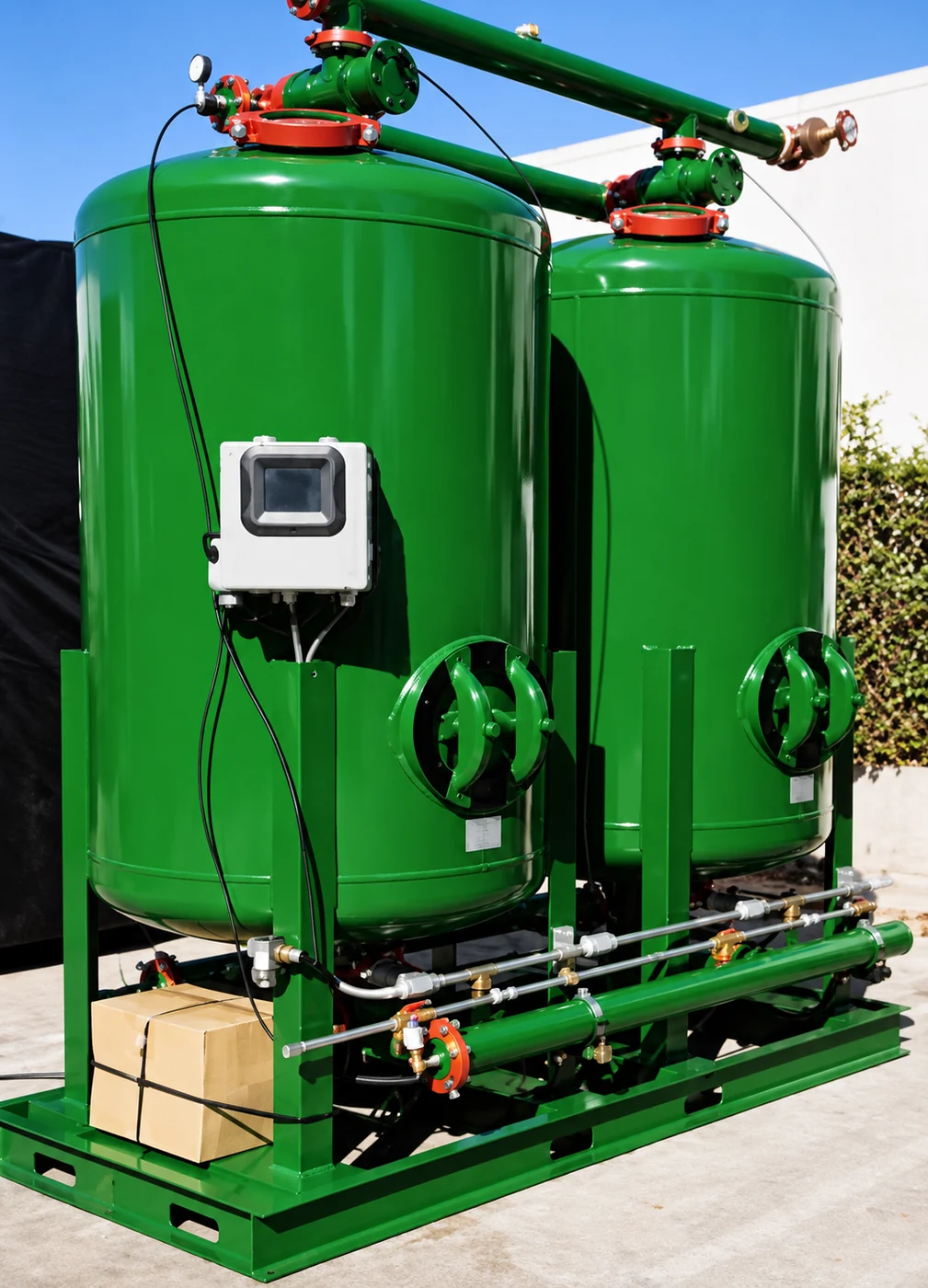
Representative samples
Review sensor location, sample flow, pressure, temperature and any conditioning needed. Define how operators will access the equipment for cleaning and inspection.

Maintain trustworthy readings
Include calibration standards, reagents, cleaning materials and consumable replacement within the maintenance plan. Record checks and investigate drift or inconsistent readings before using them to change the process.
Connect measurements with controls and records

Controllers and data loggers can connect instruments to alarms, dosing and plant control systems. Specify signals, communications, required records and the responsibilities for integration. Automatic responses and instrument-fault behaviour should be defined for the process and verified during commissioning.
Monitoring supports operational control and documentation. A sensor reading alone does not establish that all water-quality or reporting requirements have been satisfied.
Questions about water quality monitoring
Which parameters should be monitored online?
Prioritise those that support a useful operating decision or a defined reporting need. The appropriate combination depends on the water, treatment stages and intended use.
Why might online and laboratory readings differ?
Possible causes include different sampling times or locations, sample handling, measurement methods, fouling, calibration or conditioning. A structured review helps establish whether the results are comparable and what action is needed.
Discuss your requirement
Share the process, measurement requirements, sample conditions and existing control-system details to develop a focused instrumentation enquiry.
Contact NOVA ↗